Five companies shaping climate innovation
By Sachin Seth
World Oceans Day was Sunday, June 8. It’s a reminder that the blue half of our planet is more than scenery; it is our largest carbon sink, absorbing roughly 27% of human-made CO₂ every year and buffering us from the full force of climate change.
Yet the same ocean system is under siege. Up to 11M tons of plastic, the equivalent of 2,000 garbage trucks dumping waste every day, flow into marine ecosystems annually. Meanwhile, international shipping pumps out about 3% of total global greenhouse-gas emissions, a share the IPCC warns could climb to 5-8% by 2050 if the sector stalls on clean fuels.
Depressing? A little. But here’s the flip side: because so much carbon and heat moves through maritime systems, trimming even single-digit percentages can unlock gigaton-scale impact. Think of the ocean as climate physics’s Grand Central Station. One tug at the right lever, and the signal ripples through logistics, trade, supply chains, and geopolitics.
That’s why Trousdale Ventures backs founders who obsess over one stubborn variable, then scale it. History rewards that discipline. Containerization slashed shipping costs by 90% with a single modular standard. The Haber–Bosch catalyst rewired global food supply through one breakthrough in reaction kinetics. In each case a targeted fix bent an entire curve.
Below are five portfolio companies proving that targeted bets, not sprawling wish lists, move the needle. Taken together, they show that climate innovation is already investable, measurable, and bankable.
Here’s the proof: five companies cutting carbon today
1. Measure what matters for oceans

Every 24 hours, Sofar’s Spotter buoy network logs >1.5M real-time observations of wave height and direction, wind speed, sea-surface temperature, and surface currents, making it the largest privately owned ocean sensor array on Earth. Stitch the data from all the Spotters out in the ocean, and you get a tapestry of the oceans called Wayfinder. When ships follow Wayfinder’s route guidance, they burn 5.5% less fuel on average, saving $17,700 and about 130 tons of CO₂ on a typical Australia-to-China iron-ore run. Multiply that across thousands of transits and the upside is obvious: less bunker burned, fewer dollars spent, lower Scope 3 emissions reported to customers.
Why it matters:
- 900+ Spotter buoys deliver the highest-resolution marine weather feed at sea.
- Direct line of sight to IMO’s new Carbon Intensity Indicator (CII) regime; shipowners need verifiable savings today, not in 2030.
2. Save the oceans, rivers, landfills from plastic
Sway
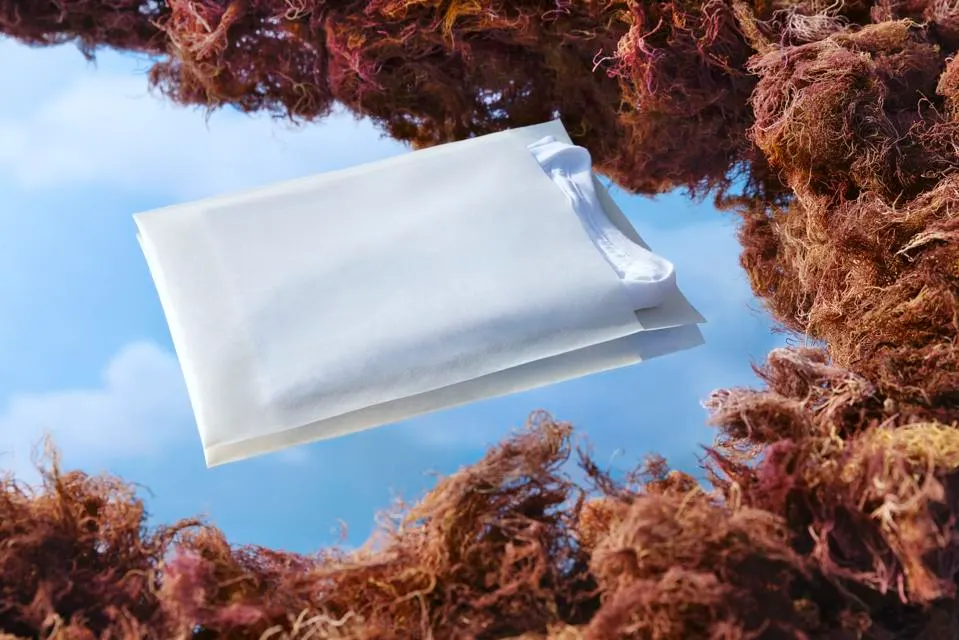
Thin-film flexible packaging is the hardest plastic category to decarbonize because it’s cheap, ubiquitous, and rarely recycled. Winner of the Tom Ford Plastic Innovation Prize, Sway’s seaweed-based thin films can home-compost in weeks and can be made on the same machinery that factories already use today. Seaweed can sequester up to 20x more CO₂ per acre than forests while requiring zero fresh water or fertilizer. Replace a gigaton-scale material (single-use plastic) with a carbon-negative feedstock and you turn waste streams into carbon sinks.
Why it matters:
- Red and brown seaweeds can be farmed without land, fertilizer, or freshwater, regenerating coastal ecosystems in the process.
- Sway focuses on O(K), not O(N) SKUs: replace the worst offender first (polybag) before branching out. Don’t boil the ocean.
Notpla
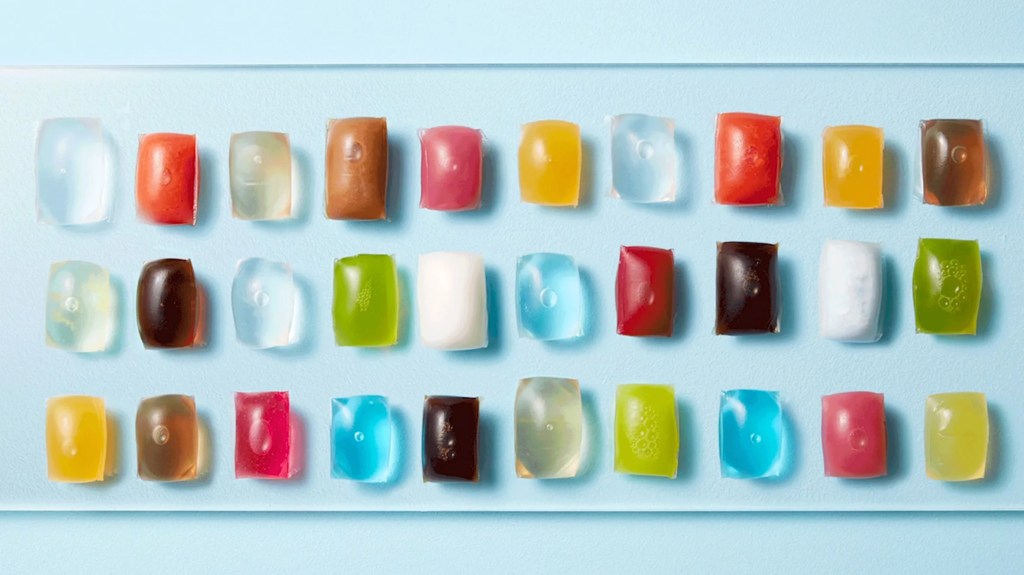
Notpla’s seaweed-based films and coatings are already replacing plastic in takeaway containers, sachets, and bubble mailers. Their Ooho capsules deliver water or sauces in an edible pod; their food boxes biodegrade faster than a banana peel. In 2022, Notpla won the Earthshot Prize, and by 2024 their seaweed-coated boxes were serving Wimbledon’s iconic strawberries and cream. In 2023 alone, 4.4M units of single-use plastic were displaced in Europe, and the material became the first to be certified plastic-free under the EU Single-Use Plastics Directive.
Why it matters:
- The EU’s SUP directive is turning voluntary swaps into mandated ones.
- Four-week biodegradation in ambient conditions keeps the life-cycle audit honest.
Zerocircle

Zerocircle sources tropical seaweed from smallholder farmers along India’s western coast and turns it into clear, heat-sealable films that are 100% marine-safe. If a wrapper falls into the Arabian Sea it breaks down into feedstock for plankton, not floating confetti. In May 2025, Swiggy piloted 30,000 of Zerocircle’s seaweed-coated burger boxes across 30 restaurants in Mumbai, Bengaluru, and Delhi for International Burger Day: its first large-scale rollout on India’s biggest delivery platform.
Why it matters:
- Asia’s rivers account for the majority of ocean plastic inflow. Zerocircle builds the replacement material where leakage is highest, turning a waste problem into coastal income.
- Formulations dissolve both in soil and seawater, tackling leakage in regions with limited waste infrastructure.
With all three companies – Notpla, Sway, and Zerocircle – it is extremely encouraging to see the product in the hands of customers today. These aren’t lab projects anymore, these companies are making an impact on the health of our marine ecosystem in real time.
3. Save marine discharge from ocean travel

REGENT’s all-electric seagliders combine the speed of aircraft with the efficiency of ferries. Flying in ground-effect just a few meters above the water, they cut lifecycle CO₂e by more than 90% compared with diesel fast-ferries or turboprop aircraft on the same 100-300 km routes, and they do so with zero liquid discharge. Aviation is one of the hardest-to-abate sectors. Seagliders sidestep airport infrastructure, slot into maritime regulations, and electrify regional travel without waiting for battery breakthroughs or global policy shifts.
Why it matters:
- Electrification of maritime support vessels is a near-term decarbonization wedge that can be bank-financed today.
- Port-to-port route rights sidestep the expensive blended-airport model of regional aviation.
As I look ahead to 2035:
Oceans enter the carbon market. Blue-carbon projects like mangroves, seagrass, and open-ocean alkalinity enhancement, could capture 1 to 4 Gt of CO₂ every year as soon as 2030, rivaling current afforestation offsets. Expect rigorous measurement, reporting, and verification standards and a premium price tier for nature-plus-tech hybrids.
Seaweed becomes a materials platform. The global bioplastics market is growing at an average annual rate of ~18%, but seaweed-based polymers are growing twice as fast due to non-food land use and rapid biomass cycling. Early techno-economic studies show seaweed resin can match low-density polyethylene costs at about $1,200 per metric ton when offshore farms yield roughly 40 metric tons of dry seaweed per hectare.
Zero-emission shipping goes short-haul first. In April 2025 the IMO agreed to mandatory emissions limits and a global price on excess ship emissions, scheduled to start in 2028 (pending ratification later this year). Shipowners must cut the greenhouse-gas intensity of their fuel 30% by 2035 and 65% by 2040.
Port infrastructure becomes the bottleneck. Electrifying the existing US fleet of ferries, tugs, and workboats would demand about 7.7 TWh of shore power every year: a five- to tenfold increase from the portside charging available today. Public-private partnerships akin to US EV-charging corridors are inevitable.
What startups should prioritize now
- Your data is your IP: Treat sensor readings, life-cycle assessment audits, and route logs as proprietary assets, but deploy them with creative transparency. The same data that satisfies regulators and renews customers also supplies the novel insights both Wall Street and policymakers now rely on.
- Policy is tailwind, not parachute: If your polymer or propulsion system or packaging solution wins only on subsidies, iterate. Policy is tailwind, not parachute. Subsidies come and go. Show your investors and customers a glide-path to profitability without any subsidies.
- Focused go-to-market: Land a marquee customer where the problem is most acute (think panamax operator, designer-label supply chain, or island-nation transit authority) then scale laterally.
Don’t boil the ocean… Focus!
The ocean is simultaneously a victim of and a solution to climate change. The five ventures above share one feature: focus. They pick a tractable slice of a giant problem (voyage routing, thin-film plastics, takeaway boxes, coastal packaging, or short-haul mobility) and execute with data discipline until the numbers flip from pilot promise to market default.
The lesson of the last decade is clear: you don’t solve the climate crisis by boiling the ocean. You solve it by measuring it, cleaning it, and moving across it – one innovation at a time. So if you’re a founder turning science fiction into carbon-negative traction, my inbox is open.